
Can You Bring Prescription Medication to Bali?
Published
Can you bring prescription medicine to Bali? Check BPOM quantity limits, documents, controlled-drug restrictions and Indonesia customs steps.
Usually yes, when the medicine is genuinely for your own treatment and you comply with Indonesia’s category, quantity and document rules. But a prescription from home does not automatically make every substance legal in Indonesia. Narcotic medicines may not be brought in from abroad, while psychotropic medicines have a separate allowance for foreign visitors and require a prescription.
Indonesia’s Food and Drug Authority, BPOM, says personal medicines may be carried in passenger baggage without a prior BPOM import permit, subject to limits and supporting documents. Its current Special Access Scheme guidance distinguishes ordinary solid, liquid, semi-solid and aerosol medicines from psychotropics and narcotics (BPOM personal-medicine guidance).
Because classifications can differ from your home country, check the active ingredient — not just the brand name — before flying. If there is any possibility that your medication is controlled, contact BPOM or an Indonesian embassy and obtain written guidance. Do this before booking a route that transits another country, because transit law may also apply.
The current personal-use limits
BPOM’s published passenger-baggage guidance sets these practical limits for medicine brought directly into Indonesia:
- Solid medicines: up to 30 pieces of each product without a prescription. More than 30 requires a doctor’s prescription in English, and the quantity may not exceed a 90-day treatment supply.
- Semi-solid, liquid and aerosol medicines: up to three units of each product without a prescription. More than three requires a doctor’s prescription in English, again capped at a 90-day treatment supply.
- Psychotropic medicine: permitted only for foreign nationals, carried with a doctor’s prescription, for a maximum 60-day treatment supply.
- Narcotic medicine: not permitted to be brought from abroad.
These limits come directly from BPOM’s Special Access Scheme page, which also explains that the medicines must be for personal rather than commercial use (BPOM personal-medicine guidance). BPOM reiterated in a 2026 update that passenger medicines are governed by dosage form, with prescription-backed treatment generally limited to 90 days (BPOM 2026 regulatory update).
The “piece” rule matters. Thirty tablets is not the same as thirty boxes. Three bottles or inhalers is not a 90-day entitlement without a prescription. When a legitimate treatment requires more than the no-prescription limit, carry the prescription and keep the quantity consistent with the prescribed daily dose and trip length.
What documents should you carry?
For any regular prescription medicine, the safest practical file is:
- the original prescription from the doctor who treats you;
- a signed doctor’s letter in English stating your name, diagnosis or clinical need where appropriate, each active ingredient, brand name, strength, dosage, total quantity and travel dates;
- medicine in original pharmacy or manufacturer packaging with the label intact;
- a copy of your passport details and itinerary;
- written correspondence from BPOM or an Indonesian mission if the classification was uncertain.
An Indonesian Ministry of Foreign Affairs mission advises travellers to carry a physician’s letter, medication list and original prescription translated into English or Bahasa Indonesia, and says embassy legalisation is not required for those documents (Indonesian Embassy Copenhagen guidance).
Use generic active-ingredient names because brands vary by country. A customs officer needs to identify the substance, not recognise your local pharmacy’s packaging. Keep the documents with the medicine in hand baggage where airline security rules allow, and retain a digital copy separately.
Controlled medicines need an ingredient-level check
Do not rely on a travel forum’s list of “allowed” brand names. Indonesia may classify an ingredient differently from your home regulator, and rules can change. Australian Smartraveller warns that some prescription medicines, including some ADHD medicines, and all cannabis-derived products may be illegal in Indonesia; it tells travellers to confirm legality before arrival (Smartraveller Indonesia advice). UK travel advice likewise states that cannabis and cannabis-based products — including medicinal preparations, CBD and THC products — are illegal in Indonesia (FCDO Indonesia safety advice).
BPOM’s current rule is the controlling practical reference for passenger quantities, but the legal category of a specific ingredient may involve BPOM, the Ministry of Health or customs. If a medicine is described at home as a narcotic, opioid, stimulant, sedative, psychotropic, medical cannabis product or controlled drug, seek written confirmation instead of guessing.
Confirmed fact: BPOM says narcotic medicines cannot be brought from abroad and gives foreign visitors a prescription-based limit for psychotropics. Practical inference: if you cannot confidently identify the Indonesian category before departure, do not carry the medicine until the competent authority has answered.
Do you need to declare medication?
Every arriving passenger must submit Indonesia’s digital customs declaration. Indonesian Customs says air and sea arrivals now use the All Indonesia service and may complete the form shortly before arrival; the declaration is the formal notice of goods carried into the country (Indonesian Customs E-CD guidance).
Answer the declaration truthfully and follow the form’s current questions. BPOM guidance says that where supporting documents are required, the passenger submits the relevant form and documents to Customs, which may coordinate with BPOM. Missing documents or non-compliance can lead to seizure and destruction of the medicine (BPOM medicine service FAQ).
If you are unsure whether the form requires a specific medicine to be declared, choose the transparent route: identify it to the customs officer and present your paperwork. Do not split medicine among bags, remove labels or hide it to avoid questions. Those actions make personal treatment look less credible, not more.
Original packaging is more than a convenience
A labelled box or pharmacy bottle connects the traveller, substance, strength and instructions. Loose tablets in an unmarked organiser remove that chain of information. You may use a small organiser during the trip, but transport the main supply in original packaging.
Keep temperature-sensitive medicine within the storage range given by its manufacturer. If you need gel packs, needles or a medical device, check both airline security rules and the product’s storage instructions. Ask the airline in advance for refrigeration or sharps procedures; do not assume cabin crew can refrigerate medicine.
Carry essential medicine in hand baggage so a delayed checked bag does not interrupt treatment, subject to aviation security restrictions. Bring a small reserve within the permitted personal-use quantity, not an unexplained commercial-looking stock.
What if you stay longer than 90 days?
The passenger-baggage allowance is not an unlimited import route. BPOM caps prescription-supported ordinary medicine at a treatment supply of up to 90 days and psychotropics at up to 60 days for foreign visitors (BPOM personal-medicine guidance).
For a longer stay, investigate whether the active ingredient is registered and available in Indonesia. BPOM’s service page directs users to its product database and contact centre to check locally available products (BPOM medicine service FAQ). Arrange continuity with a qualified clinician and licensed pharmacy in Indonesia rather than mailing extra medicine informally.
Shipping medicine is not the same as carrying it. BPOM applies separate rules to postal and courier consignments, and psychotropics may not be sent from abroad even where a foreign visitor could carry a permitted supply personally (BPOM personal-medicine guidance). Do not ask a relative to post a refill until BPOM and Customs have confirmed the route.
A safe pre-travel workflow
Start several weeks before departure if the medicine is essential or potentially controlled:
- List the brand, active ingredient, strength, form, daily dose and total quantity.
- Search BPOM’s registered-product database and current personal-import guidance.
- Ask your doctor for an English prescription and detailed letter.
- If classification is unclear, email BPOM or the nearest Indonesian embassy with the ingredient and quantity; keep the reply.
- Check the laws of every transit country as well as Indonesia.
- Keep medicines labelled and together with the documents.
- Complete the current All Indonesia customs declaration honestly and show documents when requested.
BPOM publishes contact channels on its service pages for case-specific questions (BPOM medicine service FAQ). Written confirmation is especially valuable because an airline agent, pharmacist or travel blogger cannot bind Indonesian border authorities.
What not to do
Do not:
- assume “prescription” means legal everywhere;
- carry cannabis, CBD or THC products into Indonesia;
- use a friend’s prescription or carry medicine for another person;
- bring more than the documented personal-treatment quantity;
- transfer the whole supply into unlabelled bags or organisers;
- mail a refill without checking the separate shipment rules;
- trust an unofficial online list over current BPOM and customs information.
Smartraveller’s warning is particularly important: even products legally prescribed elsewhere can be illegal in Indonesia (Smartraveller Indonesia advice). Border mistakes involving controlled substances can carry consequences far beyond losing the medicine.
The bottom line
Most travellers can bring a properly documented personal supply of ordinary prescription medicine to Bali. Keep it in original packaging, carry an English prescription and doctor’s letter, stay within BPOM’s quantity limits and disclose it honestly when the customs process requires.
The exception is the part to treat seriously: narcotic medicines cannot be brought from abroad under BPOM’s passenger guidance, psychotropics follow a separate prescription-based limit for foreign visitors, and other substances may be controlled even if legal at home. Check the active ingredient with BPOM or an Indonesian embassy before travel. A written answer obtained in advance is far safer than trying to resolve classification at Ngurah Rai Airport.
Frequently Asked Questions about Can You Bring Prescription Medication to Bali?
Curated for readers of this article
This selection uses the article headings, text and area.
Restaurants
Locavore NXT in Ubud, Bali — A hyper-local restaurant and research hub where Indonesian ingredients, fermentation, foraging and a rooftop food forest shape a long-form tasting menu.
HOME by Chef Wayan in Pererenan, Bali — Chef Wayan Kresna Yasa’s contemporary take on Balinese and Indonesian home cooking, built for sharing and rooted in regional recipes.
Rumari in Jimbaran, Bali — Raffles Bali’s progressive Indonesian restaurant follows an ingredient-led 80/20 sourcing philosophy and presents the archipelago through refined tasting menus.
Nusantara by Locavore in Ubud, Bali — A contemporary portrait of Indonesia’s regional cuisines, reviving lesser-known recipes, local ingredients and traditional cooking rituals.
Hotels
—
Places & areas
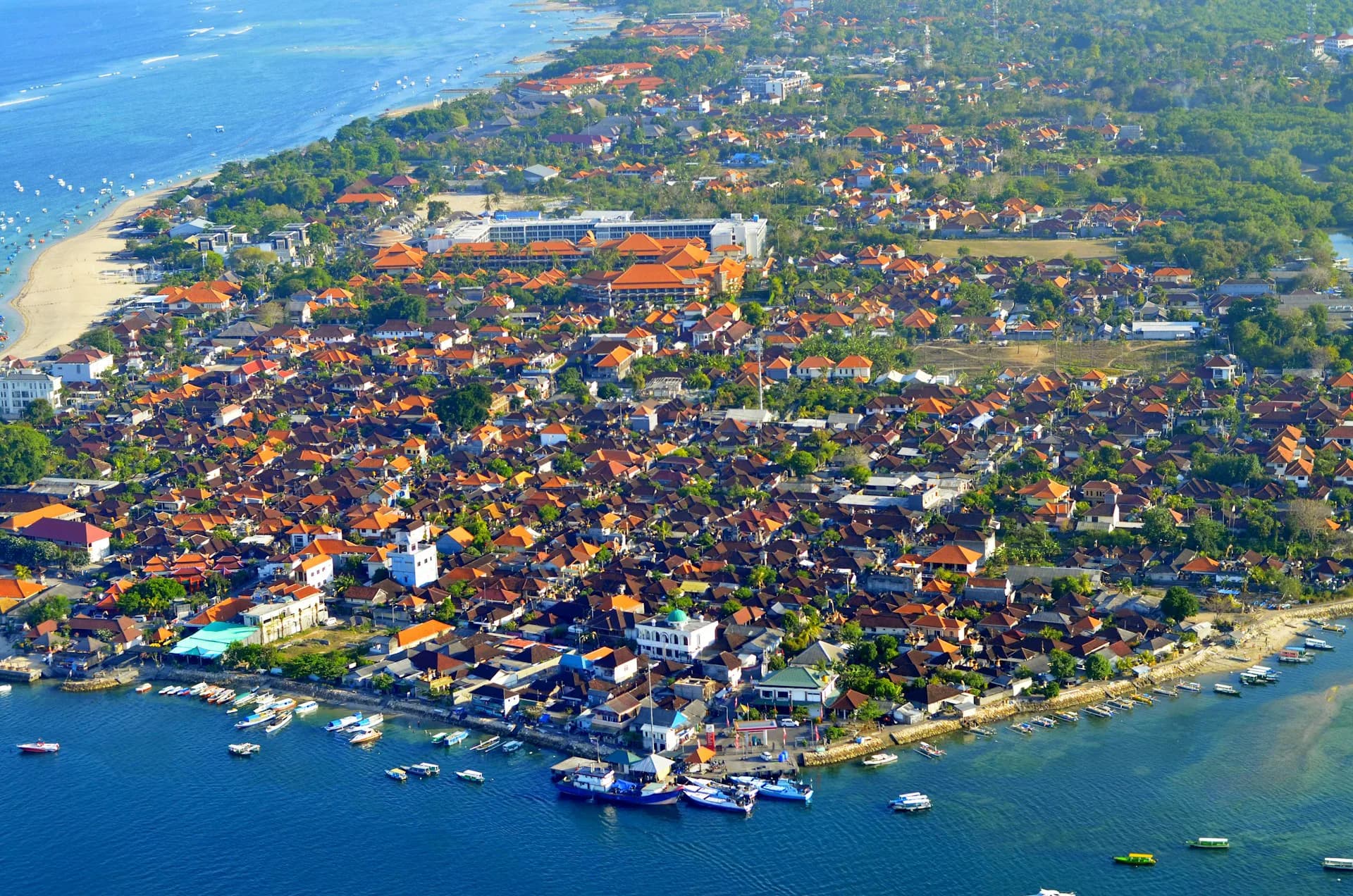
Planning a trip to Nusa Dua? This complete area guide helps you choose the best place to stay based on your travel style, whether you're looking for a luxurious beachfront resort, a family-friendly escape, or a peaceful retreat. Explore the top neighborhoods in Nusa Dua, discover what makes each area unique, and find expert recommendations to make your Bali vacation unforgettable. For more travel insights and accommodation recommendations, visit Tavilo.io.

Also read

25 Best Things to Do in Bali in 2026: Attractions, Beaches & Experiences
Discover 25 of the best things to do in Bali in 2026, from Ubud’s rice terraces and sacred temples to Uluwatu sunsets, surfing in Canggu, Mount Batur, waterfalls, beaches and Nusa Penida. Use this guide to plan a Bali itinerary that fits your travel style without wasting time crossing the island.

Seminyak Travel Guide: Luxury Shopping, Dining & Beach Clubs
Plan a stylish Seminyak stay with the best areas for luxury shopping, dining, beach clubs, sunset, spas, hotels and practical Bali travel tips.

Canggu Travel Guide: Every Beach in & Around Canggu
Canggu isn't a destination you visit for one perfect tropical beach. Its coastline is a long stretch of dark volcanic sand, surf breaks, sunset spots, beach clubs and quieter local beaches.
Read next
Plan a stylish Seminyak stay with the best areas for luxury shopping, dining, beach clubs, sunset, spas, hotels and practical Bali travel tips.
View →