
Can You Use Credit Cards and QRIS in Bali?
Published
Can tourists use cards and QRIS in Bali? Learn where cash is still needed, which visitors can use cross-border QRIS and how to pay more safely.
Yes, credit and debit cards are widely usable in Bali’s hotels, restaurants, malls and established tourism businesses — but they are not universal. Carry some Indonesian rupiah for small shops, markets, parking, tips and places where a terminal is unavailable. QRIS can be extremely useful, but most foreign visitors can use it only if their home bank or wallet participates in QRIS Cross-Border.
Indonesia’s Ministry of Tourism says international card networks are commonly accepted in Bali and other major visitor centres, while also advising travellers to carry rupiah for smaller towns, remote areas and cash-only local businesses (Indonesia Travel payment guidance). Bank Indonesia describes QRIS as the country’s standard QR-code payment system and says international travellers can pay through participating cross-border applications (Bank Indonesia QRIS overview).
The practical payment plan is therefore not “cash or card.” It is a small, resilient mix: two cards stored separately, enough rupiah for the day, and QRIS only after you confirm that your own app supports payments in Indonesia.
Where cards usually work
Visa and Mastercard are the safest card-network assumptions in Bali’s formal tourism economy. The Ministry of Tourism says both are the most widely accepted, with JCB and American Express also usable but Amex supported by fewer local banking relationships (Indonesia Travel payment guidance). Acceptance still depends on the individual merchant and terminal.
You can reasonably expect card acceptance at many:
- hotels and professionally managed villas;
- supermarkets and shopping centres;
- larger restaurants, beach clubs and cafés;
- hospitals and established clinics;
- tour desks and transport counters with payment terminals.
Do not turn that expectation into a guarantee. Terminals can be offline, a specific network may be rejected, or a merchant may set a policy about minimum spend or surcharges. Ask before ordering or receiving a service if card payment is essential to you.
Small warungs, local markets, temple donation points, roadside vendors, parking attendants and businesses outside the main visitor zones are more likely to require cash or a domestic QR payment. That is why a backup amount of rupiah remains useful even if most of your spending is digital.
What QRIS actually is
QRIS — pronounced roughly like “kris” — is the Quick Response Code Indonesian Standard set by Bank Indonesia. It lets participating payment providers use a standard merchant QR code rather than requiring a different code for every wallet (Bank Indonesia QRIS overview).
At the counter, the merchant displays a QRIS code. A compatible payment app scans it, the payer enters or confirms the rupiah amount, reviews the merchant and conversion details, authorises the transaction and both sides receive a success notification. The merchant receives rupiah.
For a resident with an Indonesian bank or wallet, that process is routine. For an international visitor, the important words are compatible payment app. A phone camera can read the image, but it cannot send money. A foreign mobile-banking app may display a QR scanner yet still lack the required cross-border connection.
Can foreign tourists use QRIS?
Some can. Bank Indonesia’s QRIS Cross-Border system connects QRIS to participating payment providers in partner markets. Its current official page lists the supported countries, standards and payment providers, and explains that a foreign tourist scans QRIS with an eligible home-country app, enters the amount in rupiah and confirms the converted amount in the home currency (Bank Indonesia QRIS Cross-Border).
Coverage changes as providers join and connections launch. Check Bank Indonesia’s current list and your bank or wallet before relying on it. The fact that your country appears on a partner list does not mean every bank in that country participates. Likewise, a merchant displaying QRIS may need its provider to support cross-border transactions.
A useful pre-trip test is:
- Open your bank or wallet’s official help page.
- Search for “Indonesia QRIS,” “cross-border QR” or the Indonesian payment connection.
- Confirm that inbound tourist payments in Indonesia are supported, not only outbound payments for Indonesians.
- Check fees, exchange-rate presentation, transaction limits and whether roaming or SMS verification is needed.
- Keep another payment method available for the first attempt.
Bank Indonesia says the conversion is shown through the participating app and the merchant receives rupiah after a successful transaction (Bank Indonesia QRIS Cross-Border). Review the merchant name and both currency amounts before authorising.
QRIS is useful, but it should not be your only plan
QRIS is especially helpful at businesses that do not have a card terminal. It can reduce the need for small notes and provide a transaction record. Bali’s official tourist levy service also lists QRIS alongside cards, bank transfer and virtual account as accepted payment channels, demonstrating how embedded the standard has become in official services (Love Bali tourist levy FAQ).
Still, technical failures happen. Your app may need mobile data, the merchant’s account may not accept cross-border payments, or a code may be damaged. Carry enough rupiah to complete the purchase or choose another merchant. Never send money to a different personal account merely because someone says the displayed official code is broken unless you have verified the recipient and understand the transaction.
How much cash should you carry?
There is no single correct daily amount because a traveller eating at resorts has a different pattern from someone visiting markets and remote beaches. Carry enough rupiah for likely small expenses and a transport backup, not your entire trip budget.
Keep larger reserves secured at your accommodation, split cards between two safe places and avoid exposing a thick wallet at the counter. Use small notes where exact change may be difficult. Before a day trip beyond the main towns, withdraw or exchange money in advance; the Ministry of Tourism notes that ATM and card access can be harder in smaller or remote locations (Indonesia Travel payment guidance).
Indonesia requires declaration of very large cash amounts at the border, but ordinary holiday spending is far below that threshold. If you intend to carry a large sum, verify the current declaration rule directly with Indonesian Customs rather than relying on an old travel blog.
Using ATMs more safely
Prefer an ATM located inside or directly attached to a bank branch, airport banking area, supermarket or other controlled location. Inspect the card slot and keypad, shield your PIN, cancel if the machine behaves strangely, and take the card and cash before walking away.
UK travel advice warns that credit-card fraud occurs in Indonesia, tells visitors not to lose sight of cards during transactions, and describes fake phone numbers placed on ATMs to obtain card details (FCDO Indonesia safety advice). If a card is retained, use the bank’s official website or number printed on the card — not a sticker attached to the machine.
The ATM may show its own withdrawal limit, and your home bank may apply another. Fees and exchange rates vary by operator and issuer. Review the on-screen total before confirming. If the screen offers to convert the withdrawal into your home currency, compare that rate and markup with your bank’s terms; do not accept an unfamiliar conversion automatically.
Paying by card without unnecessary risk
Keep the card in sight and tap, insert or swipe it yourself where possible. Confirm the amount in rupiah before entering a PIN or signing. Save receipts until pending transactions settle, and enable transaction notifications in your banking app.
The FCDO’s warning about card fraud supports a simple rule: do not hand a card to someone who walks away with it (FCDO Indonesia safety advice). If a restaurant’s terminal is elsewhere, accompany the staff member or ask for the machine to be brought to you.
Bring a second card from a different account or network if possible. Store it separately so one lost wallet does not remove every option. Tell your bank where you are travelling if its fraud controls require a travel notice, and ensure you can receive authentication messages abroad.
Money changers: verify the operator
If you exchange physical cash, use a licensed operator and count the rupiah carefully before leaving. FCDO guidance warns that unlicensed money changers may short-change customers and says licensed exchanges can be identified through Bank Indonesia credentials and a verifiable QR code (FCDO Indonesia safety advice).
An unusually attractive rate can be the start of a distraction or counting trick. Ask about commission before handing over money, watch the full count and do not allow notes to be removed from the stack after you verify it. If the process feels confusing, stop and use a bank or another licensed exchange.
A payment setup that works for most visitors
Before departure:
- bring two active cards and store them separately;
- check foreign transaction, ATM and replacement-card terms;
- confirm that your phone number and banking authentication work abroad;
- check whether your home app is on Bank Indonesia’s current QRIS Cross-Border list;
- save official bank contact numbers offline.
After arrival:
- obtain a modest amount of rupiah from a bank ATM or licensed exchange;
- make one small card transaction and one small QRIS transaction, if supported;
- verify the merchant name and rupiah amount every time;
- keep cash for transport and cash-only businesses;
- lock or freeze a missing card immediately.
The bottom line
Cards are practical across much of tourist Bali, but cash remains necessary at many small or remote businesses. QRIS is widespread on the merchant side; international visitors can use it only through a participating cross-border app, so check your specific provider before the trip.
The most reliable combination is two cards, a modest rupiah reserve and QRIS as an additional option — not a single point of failure. That setup lets you pay at a hotel, a village warung and a QR-only counter without assuming that every terminal, app or ATM will work on demand.
Frequently Asked Questions about Can You Use Credit Cards and QRIS in Bali?
Curated for readers of this article
This selection uses the article headings, text and area.
Restaurants
Merah Putih in Seminyak, Bali — Indonesian classics and contemporary dishes from across the archipelago served in one of Bali’s most striking cathedral-like dining rooms.
Hujan Locale in Ubud, Bali — A modern Indonesian restaurant by Will Meyrick that draws on street-food traditions and regional recipes from across the archipelago.
Locavore NXT in Ubud, Bali — A hyper-local restaurant and research hub where Indonesian ingredients, fermentation, foraging and a rooftop food forest shape a long-form tasting menu.
HOME by Chef Wayan in Pererenan, Bali — Chef Wayan Kresna Yasa’s contemporary take on Balinese and Indonesian home cooking, built for sharing and rooted in regional recipes.
Hotels
—
Places & areas
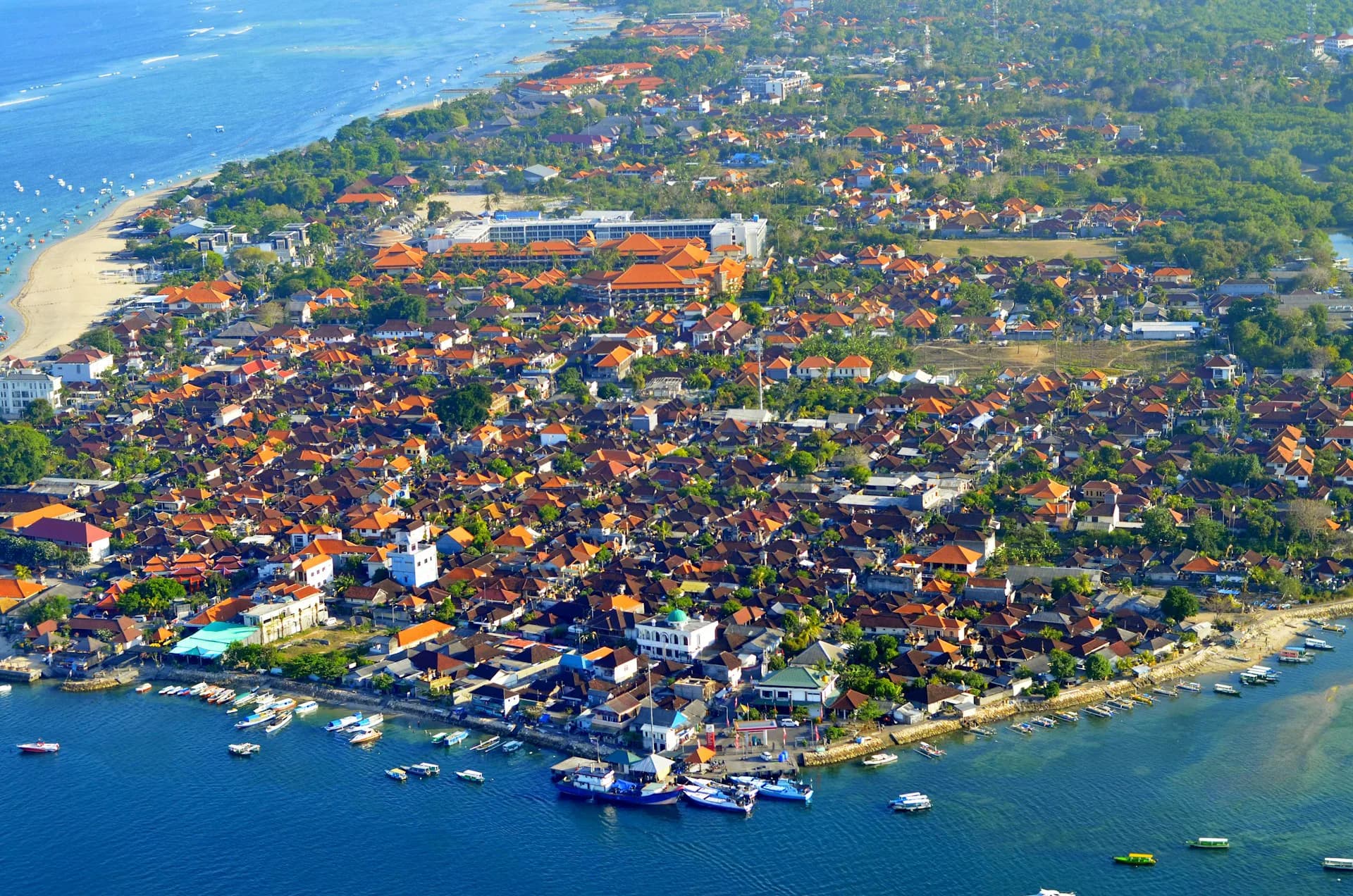
Planning a trip to Nusa Dua? This complete area guide helps you choose the best place to stay based on your travel style, whether you're looking for a luxurious beachfront resort, a family-friendly escape, or a peaceful retreat. Explore the top neighborhoods in Nusa Dua, discover what makes each area unique, and find expert recommendations to make your Bali vacation unforgettable. For more travel insights and accommodation recommendations, visit Tavilo.io.

Also read
25 Best Things to Do in Bali in 2026: Attractions, Beaches & Experiences
Discover 25 of the best things to do in Bali in 2026, from Ubud’s rice terraces and sacred temples to Uluwatu sunsets, surfing in Canggu, Mount Batur, waterfalls, beaches and Nusa Penida. Use this guide to plan a Bali itinerary that fits your travel style without wasting time crossing the island.

Seminyak Travel Guide: Luxury Shopping, Dining & Beach Clubs
Plan a stylish Seminyak stay with the best areas for luxury shopping, dining, beach clubs, sunset, spas, hotels and practical Bali travel tips.

Canggu Travel Guide: Every Beach in & Around Canggu
Canggu isn't a destination you visit for one perfect tropical beach. Its coastline is a long stretch of dark volcanic sand, surf breaks, sunset spots, beach clubs and quieter local beaches.
Read next
Complete 2026 tourist guide: how to get a taxi in Bali, why Uber doesn't work, which app to use (Grab, Gojek, InDrive), real prices from the airport, scams to avoid, and payment tips for foreigners.
View →